

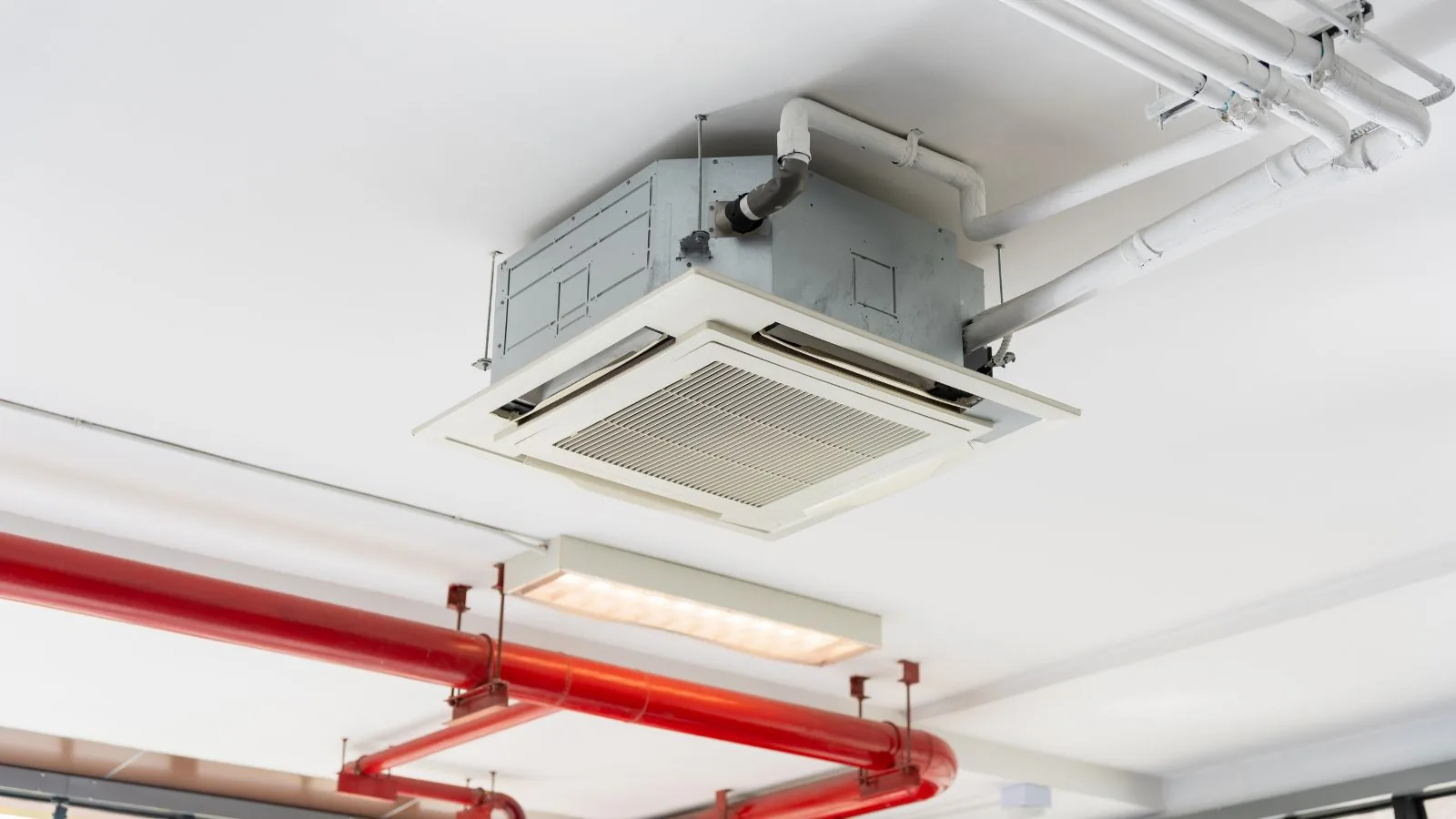
Air conditioners remove moisture from the air, and that water has to leave the house through a condensate drain line. When the line clogs or the drain pan fails, water backs up and spills into the ceiling, closet or attic below the unit. The damage tends to be gradual, which is why it often goes unnoticed for weeks.
AC leak water damage is the wetting of building materials by condensate or leaking HVAC components. Signs include a stained ceiling under an air handler, a damp closet floor, a musty smell or a puddle at the unit.
Attic air handlers send water through ceilings, so a stain from one belongs partly to ceiling water damage repair. Closet units can soak carpet and flooring, covered in carpet restoration.
Why condensate lines fail
The drain line carries a steady trickle of water during cooling season. Algae and debris build up inside it, and a plug of slime can close the pipe entirely. The drain pan under the coil then fills, and without a safety switch the overflow goes wherever gravity takes it.
Because the failure builds slowly, the first sign is often a stained ceiling or a smell rather than a puddle. By then, drywall and insulation have usually been damp for some time.
Where AC leaks show up
Where the air handler sits decides where the water goes.
| Unit location | Where water appears | Typical damage |
|---|---|---|
| Attic | Ceiling below the unit | Brown stains, soft drywall, wet insulation |
| Closet or utility room | Floor and baseboard of the closet | Swollen trim, damp carpet or flooring |
| Basement or crawl space | Floor around the unit | Wet slab and rusted components |
| Window or ductless unit | Wall below the unit | Stained wall and damp baseboard |
AC leak stained a ceiling?
Call dispatch for an inspection and drying plan.
What to do when you find an AC leak
- Turn off the air conditioner at the thermostat and the breaker to stop adding water.
- Look for a clogged drain line or a full pan, and clear it only if you know how, otherwise call an HVAC technician.
- Photograph the stain, the pan and the line before anything is cleaned up.
- Call dispatch if the ceiling is stained, the drywall is soft or the floor is wet.
How restoration and repair work
Crews use moisture meters and thermal imaging to see how far the water traveled, then remove wet insulation and drywall that cannot be saved. Air movers and dehumidifiers dry the cavity, and readings decide when it is done. If mold is suspected after a long leak, testing and remediation follow ANSI/IICRC S520 practice, and this build does not claim to diagnose it, so a physician handles any health question.
The HVAC repair belongs to an HVAC technician. We coordinate around that visit, so the clog or pan is fixed before drying begins and the leak does not restart.
What affects the cost of AC leak repair
Slow leaks vary a lot.
Duration of the leak
Weeks of dripping wets more material than a single overflow.
Ceiling and attic damage
Wet insulation and drywall add removal and rebuild.
Flooring
Closet floors and carpet may be dried or replaced.
HVAC repair
Clearing a line or replacing a pan is separate work.
Insurance often treats a slow, long-term leak differently from a sudden failure. Ask your insurer which applies to your cause.
Preventing repeat condensate leaks
Ask your HVAC technician about a float switch in the drain pan, which shuts the system off if water backs up. Have the drain line flushed each cooling season, and check the pan when you change the filter. A few minutes each spring can prevent a stained ceiling in July.
Related damage to check
A leaking air handler often wets the ceiling below it, so ceiling repair and structural drying usually follow the leak. If the pan overflowed onto carpet, see carpet water damage as well.
AC leak questions
Can you inspect water damage from an AC leak the same day?
Same-day response is offered when crews are available. Call dispatch and describe the stain, the unit location and how long you think it leaked.
Do you repair the air conditioner itself?
No. An HVAC technician repairs the unit, and we handle drying and the building repairs afterward.
Will insurance cover an AC leak?
Sudden leaks are often covered, and slow, long-term leaks often are not. Check your policy or ask your insurer.
Is a musty smell after an AC leak a sign of mold?
It can be. Mold needs moisture, so drying the area is the first step, and testing follows the S520 standard if there are signs of growth.