

Water in a basement is an emergency because it sits at the lowest point of the house and reaches finished walls, furnace controls and stored belongings. Stay out if water is near outlets or the panel, shut off the main if a pipe is the source, and call the 24/7 line. Never wade into deep water with power on.
Basement water damage cleanup covers pumping out, drying and repairing a below-grade space after water entry. Sources include a failed sump pump, groundwater seepage, a sewer backup, a window well overflow or a supply line failure.
Contaminated water changes the job, so see sewage backup cleanup and flood damage. Wet carpet in a finished basement is covered on the carpet page.
Basement flooding: first steps
Safety comes before salvage.
- Do not enter if water is near the electrical panel or outlets. Call the utility or 911.
- If a pipe is the source, shut off the main water valve.
- Move valuables upstairs and lift boxes off the floor.
- Photograph the water and the source, then call dispatch.
Where basement water comes from
The source decides the water category, the cost and the coverage. The same steps apply in Waunakee neighborhoods such as Southbridge.
| Source | Typical category | Insurance note |
|---|---|---|
| Supply line or water heater | Category 1 | Sudden events often covered. |
| Failed sump pump or overflow | Category 2 or 3 | Often needs a special endorsement. |
| Groundwater seepage | Category 2 or 3 | Generally not covered by homeowners. |
| Sewer backup | Category 3 | Generally needs a backup endorsement. |
Water in the basement?
Stay out of deep water and call the 24/7 line.
Why basements flood in Waunakee
Madison, the nearest benchmark, averages about 37 inches of precipitation and 52 inches of snow a year. The spring thaw puts sump pumps under their hardest workload, and a pump that quits during a heavy melt can flood a basement within hours. A battery backup and a tested discharge line reduce the odds.
Dane County's August 2018 flooding showed that heavy rain can flood basements far from any mapped floodplain. The Wisconsin insurance commissioner notes that most homeowner policies do not cover seepage through the foundation, and sump overflow needs an endorsement.
How we clean and dry a basement
- Pumps clear standing water, then extraction units handle carpet and floors.
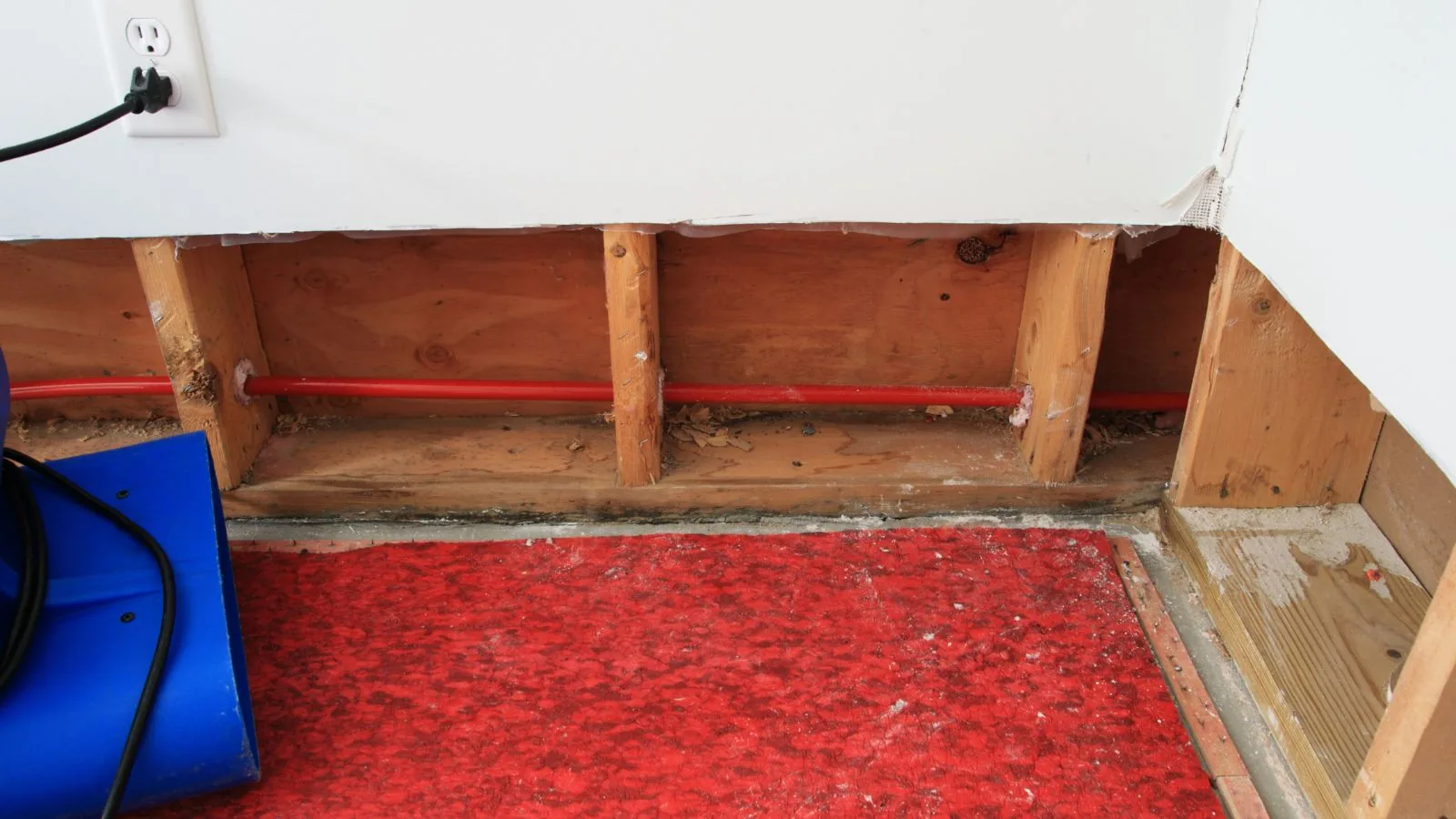
- Baseboards and the lower wall are removed where they hold water, and wet insulation is bagged.
- Air movers and dehumidifiers dry the space, and desiccant units help in cold basements.
- Readings are logged to the dry standard, and repair scope follows once the space is dry.
Restoration is not waterproofing. If water keeps entering through the foundation, a drainage or foundation contractor addresses the cause.
What affects basement cleanup costs
Finished versus unfinished space matters most.
Water category
Contamination adds controls and disposal.
Finished space
Carpet, drywall and trim add removal and rebuild.
Depth and duration
Deep, long-standing water wets more materials.
Contents
Storage and furniture add handling.
Check your policy for sump overflow and sewer backup endorsements before a loss, and call dispatch for a scope walkthrough.
What happens to a finished basement
Finished basements hold more material than most owners realize. Behind the drywall sit studs, insulation and a bottom plate that sit on or near a slab, and under the carpet sits a pad that behaves like a sponge. When water reaches the floor it moves into all three layers, so the visible puddle is rarely the full loss.
The usual sequence is to remove the carpet pad, cut the drywall a short distance above the water line and pull wet insulation. Studs and plates are cleaned and dried in place. Trim, doors and built-ins are checked one by one, and solid wood often survives where particleboard does not.
Keeping the next storm out
Restoration dries what water damaged. These steps reduce the chance of a repeat and are worth discussing with a drainage or plumbing contractor.
- Keep gutters clear and extend downspouts several feet from the foundation.
- Grade soil so it slopes away from the house.
- Test the sump pump twice a year and consider a battery backup.
- Clear window wells and cover them if they collect water.
- Run a dehumidifier in damp seasons and keep indoor humidity in the 30 to 50 percent range recommended by the EPA.
Basement water damage questions
Do you handle basement water emergencies at night or on weekends in Waunakee?
Yes. Dispatch is open 24 hours a day and same-day response is offered when crews are available. Call and describe the water.
Will homeowners insurance cover a flooded basement?
It depends on the source. Sudden pipe failures are often covered, while seepage and sump overflow generally need special coverage.
Do you waterproof basements?
No. We dry and repair after water damage. Waterproofing is a separate trade.
How soon should a flooded basement be dried?
As soon as it is safe. Drywall and carpet start to fail within a day or two, and mold risk rises with time.