

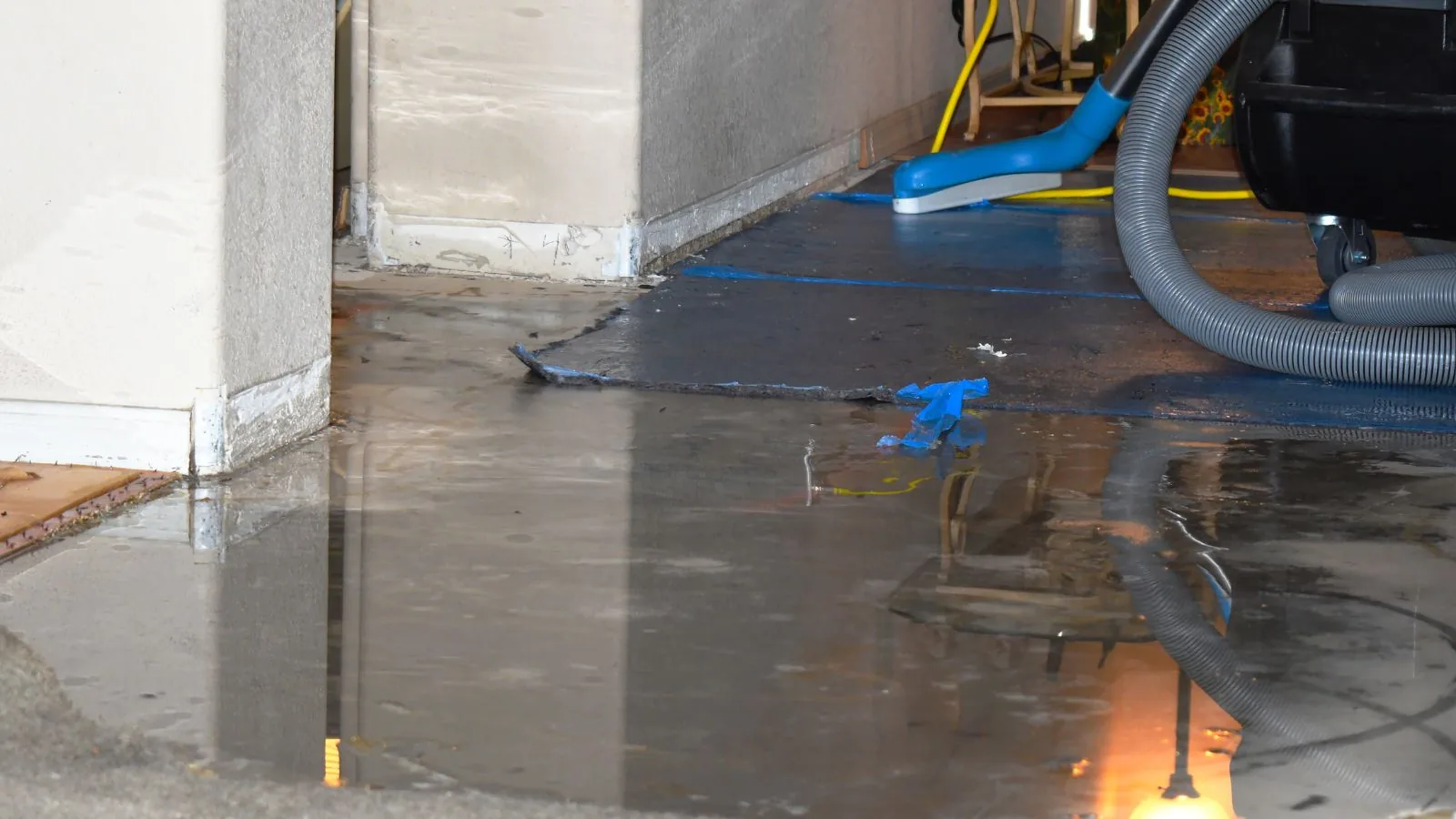
Standing water in your home is an emergency, because every hour it sits it soaks further into drywall, subfloor and furniture. The 24/7 dispatch line sends a crew with pumps and extraction units, and while you wait you can shut off the source, lift valuables off the floor and stay out of the water if you cannot tell what it is.
Water extraction is the removal of standing and pooled water from a structure, and it comes before any drying begins. Dehumidifiers and air movers handle moisture in the air and in materials, but they cannot clear an inch of water off a floor. Pulling the bulk water out first shortens the drying that follows.
This page covers the extraction step on its own. If the water came from a specific source, the pages on burst pipes and flood damage explain what else happens on those jobs.
When standing water is an emergency
Call right away if you see any of the following, and make the call before you start mopping.
- Water deeper than a puddle in a living area, basement or garage.
- Water near outlets, extension cords, the electrical panel or the furnace. Stay out and call your electric utility or 911 first.
- Water that came from outside, from a drain or from a toilet, which may be contaminated.
- A ceiling that is bulging or dripping heavily.
Turn off the main water valve if the source is still running, and photograph the water before it is moved.
How the extraction works
Every job is different, but the sequence stays close to this.
- The crew finds and confirms the source is stopped, then checks for electrical hazards before any equipment goes in.
- Submersible pumps clear deep water first, which can mean several inches or more in a basement.
- Truck-mounted or portable extraction units with wands pull the remaining water from carpet, pad and hard floors.
- Weighted extraction tools press water out of carpet and pad so the pad can be judged for salvage.
- Moisture meters and thermal imaging then map what the visible water left behind in walls and subfloor.
Water still on the floor?
A crew can be dispatched around the clock. Call now and describe the water.
Which method fits which floor
The surface under the water decides the tool. Using the wrong one leaves moisture behind or damages a floor that could have been saved.
| Surface | Usual extraction approach | What to know |
|---|---|---|
| Concrete or tile | Pumps and wet vacuums, then squeegee tools | Fast to clear, but moisture can still sit in wall bottoms. |
| Carpet over pad | Weighted extraction wands, then pad inspection | Pad often comes out, especially after Category 2 water. |
| Hardwood or laminate | Low-profile extraction and floor drying systems | Time matters most here. Boards can cup within days. |
| Finished basement | Pump-out, extraction and wall cavity checks | Water hides behind baseboards and in insulation. |
After the water is out
Extraction is the first stage, not the finish. Once the standing water is gone the crew checks readings and decides what happens next, which usually means structural drying and dehumidification for several days. Wet carpet may continue to a carpet restoration or replacement decision, and soaked drywall may move into wall and drywall repair.
Cleanup chemistry also depends on the water. Clean supply water allows more to be dried in place, while sewage or storm runoff means porous materials come out and surfaces are sanitized. That decision comes from the water category, not from how bad the floor looks.
What affects the price of water extraction
The written scope explains each of these before work starts.
Depth and volume
More water means longer pump time and more equipment on site.
Water category
Contaminated water adds protective gear, disposal and sanitizing steps.
Access
Stairs, tight crawl spaces and finished rooms change how equipment is staged.
Follow-up work
Drying days and any demolition are scoped separately from extraction.
Homeowners insurance often covers extraction after a sudden, accidental event, and usually does not after a gradual leak or flood. Check your policy or ask your insurer, and call the 24/7 line for a scope walkthrough.
Water extraction questions
Do you handle water extraction emergencies at night or on weekends in Waunakee?
Yes. Dispatch answers 24 hours a day, including weekends and holidays. Same-day response is offered when crews are available, and the call-taker gives you shut-off and safety steps while one is arranged.
How fast should standing water be removed?
As soon as it is safe. Water can wick into drywall and under flooring within hours, and hardwood and carpet pad are often judged on how long they sat wet.
Can wet carpet be saved after extraction?
Often the carpet can, and the pad often cannot, especially if the water was not clean. The crew tests the carpet and pad with moisture meters before deciding.
Is extraction enough, or does the house still need drying?
The house still needs drying. Extraction removes liquid water, but walls, subfloor and framing hold moisture that only air movers and dehumidifiers can bring down.