

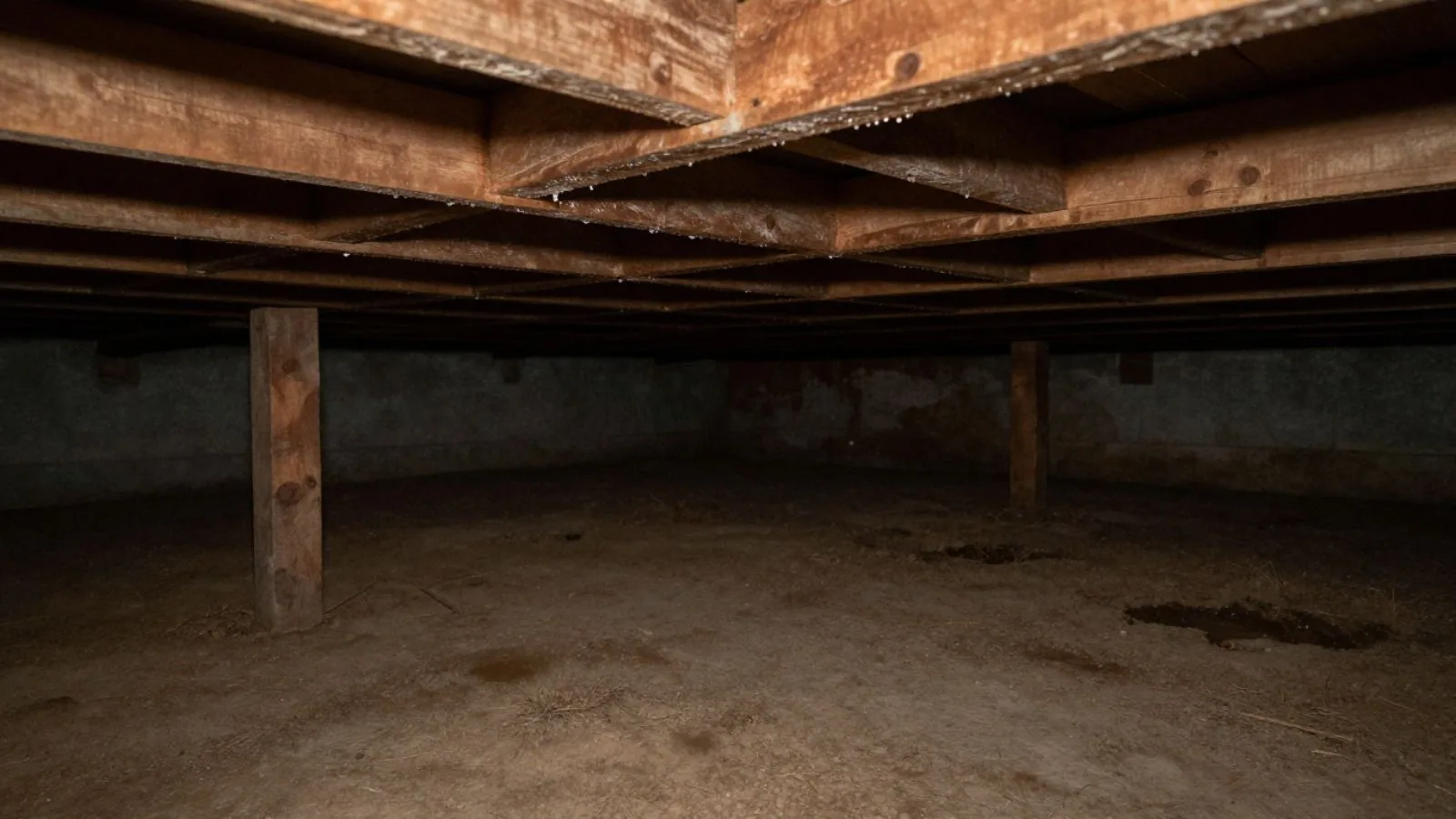
A crawl space is a low, closed void under the floor, and water there causes damage that stays out of sight. Wet insulation sags, joists absorb moisture and a damp vapor barrier lets moisture rise into the floors above. If you can see water or smell dampness, call dispatch for an inspection.
Crawl space water damage is the wetting of soil, insulation, joists and subfloor underneath a house. It is distinct from a basement, since there is little headroom and the work is done on hands and knees. Many Waunakee homes have basements rather than crawl spaces, so this page is for properties that do.
Water that came through a foundation or from storm runoff may overlap with flood cleanup, and the drying side is covered under structural drying.
How water gets into a crawl space
Water enters through open vents during storms, through cracks in foundation walls, from plumbing leaks above and from ground that stays saturated after snowmelt. Gutters that discharge near the foundation add to it. A broken supply line inside the void can also fill it quickly.
The soil floor matters because it holds water after the standing puddles are gone. That damp ground then evaporates into the air above it for weeks unless it is dried and covered.
What gets wet and what it means
Each material in a crawl space reacts differently.
| Material | Effect of water | Usual action |
|---|---|---|
| Fiberglass insulation | Absorbs and sags, then loses its value | Remove and replace after drying |
| Wood joists and subfloor | Absorbs moisture slowly, can host mold | Dry with air movers and monitor |
| Vapor barrier | Traps water on the soil | Lift, dry and re-lay |
| Soil floor | Evaporates for weeks | Dry the area and improve drainage |
Water under the house?
Call dispatch for an inspection.
How we dry a crawl space
- Standing water is pumped out and the soil surface is dried as far as possible.
- Wet insulation and damaged vapor barrier are removed.
- Air movers and dehumidifiers are placed in the void, with moisture readings taken on the joists and subfloor.
- The crew advises when drainage, gutters or a sump work belong to another contractor.
Restoration dries what water damaged. Stopping repeat intrusion is a drainage or foundation job, and the crew will say so plainly.
When mold becomes a concern
Mold needs moisture and organic material, and a wet crawl space supplies both. If you see growth after water has been present, testing and remediation follow the ANSI/IICRC S520 standard, and health questions belong to a physician. This site does not diagnose or promise outcomes.
What affects the cost of crawl space water damage
Access is the big variable.
Void height and access
Tight spaces slow everything down.
Insulation and barrier
Removal and replacement are scoped separately.
Drying days
Soil and wood dry slowly.
Source of water
A plumbing leak and a groundwater issue need different follow-up.
Coverage depends on the cause. Plumbing failures are often covered and groundwater seepage generally is not, so ask your insurer.
Reducing repeat crawl space water
These measures belong to drainage and foundation contractors, and they work together with drying.
- Extend downspouts and regrade soil so water drains away from the foundation.
- Seal or cover vents that let storm water in, as a contractor advises.
- Repair plumbing leaks inside the void promptly.
- Consider a sump pit and a vapor barrier laid over the soil.
- Check the space after heavy rain and during the spring melt.
Working in tight spaces safely
Crawl spaces carry hazards that a basement does not, including low clearance, uneven soil, exposed wiring and limited ventilation. Crews wear protective gear and may use air scrubbers if material is disturbed. If you must look in yourself, stay clear of standing water near wiring and let someone know where you are.
Related damage to check
Water below the floor rarely stays there. Structural drying covers the framing, and a wet basement often shares the same cause, such as high groundwater after a storm.
Crawl space questions
Can you inspect a wet crawl space the same day in Waunakee?
Same-day response is offered when crews are available. Call, describe what you see and dispatch arranges a visit.
Do you waterproof crawl spaces?
No. We dry and repair after water damage. Waterproofing and drainage work is a separate trade.
Is a wet crawl space covered by insurance?
Plumbing failures are often covered, while groundwater seepage generally is not. Check your policy.
Can wet insulation be reused?
Usually not. Wet fiberglass and foam lose their value and are replaced after drying.