

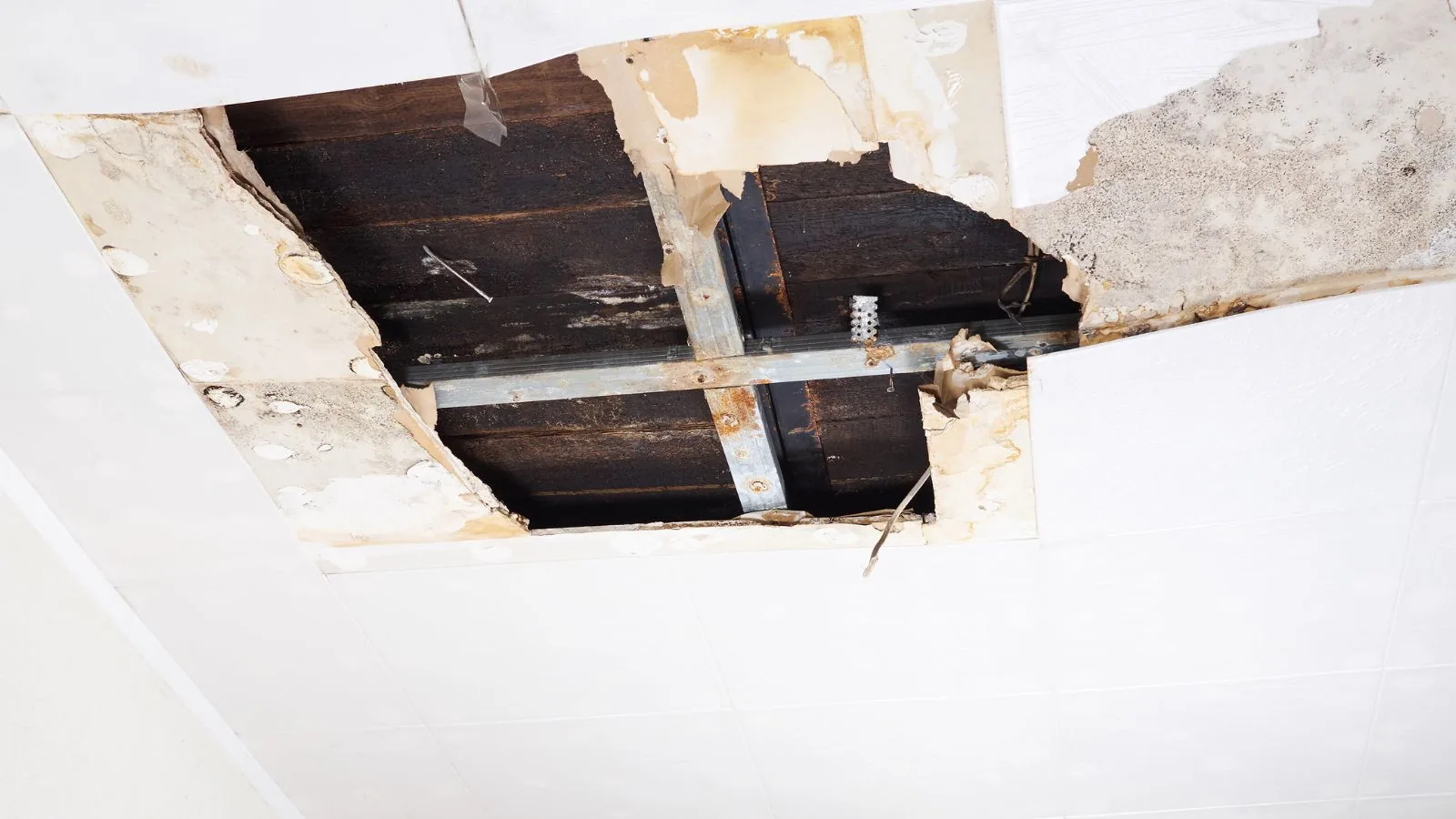
A water loss in a business is an emergency for more than the building. Every hour of downtime costs revenue, and wet inventory, equipment and records lose value quickly. Shut off the water, move inventory and electronics off the floor if it is safe, photograph the damage and call the 24/7 line before closing for the night.
Commercial water damage restoration is the extraction, drying and repair of commercial and multi-unit properties after water loss. It uses the same methods as residential work but with larger equipment, tighter schedules and heavier documentation, because tenants, landlords and insurers all need a clear record.
If the cause is a pipe, an appliance or a storm, the relevant pages explain the source. See burst pipes, storm damage and sewage backups for what each involves.
Commercial water loss: first steps
Protect people, then property, then the schedule.
- Shut off the water at the main or the affected branch, and confirm it with the building contact.
- Keep staff and customers out of wet areas and away from electrical. Call the utility or 911 if water is near the panel.
- Move inventory, files and electronics up and out of the water if it is safe.
- Photograph the damage and note times, then call dispatch.
Commercial building types and typical water risks
Each building type has its own weak points. The same steps apply in Waunakee neighborhoods such as Downtown Waunakee.
| Building type | Common sources | Special concerns |
|---|---|---|
| Retail and restaurants | Supply lines, dishwashers, grease traps, roof leaks | Food safety, customer access, inventory. |
| Offices | Pipe failures, HVAC condensate, roof leaks | Records, electronics, tenant disruption. |
| Multi-unit and rental buildings | Unit-to-unit leaks, shared risers | Several occupants and policies. |
| Warehouses and shops | Roof leaks, sprinkler discharge, floor drains | Inventory and large floor areas. |
Business losing hours to water?
Call the 24/7 line to start extraction and drying.
How commercial jobs are run
- Dispatch arranges a walkthrough with the owner or property manager and agrees the scope and priorities.
- Crews extract and dry in sequence, often working around operating hours to limit downtime.
- Moisture readings and photos are logged, which supports claims by owners and tenants.
- Communication with the property manager continues through the job, and repair scope is estimated when drying finishes.
Landlords, tenants and insurance
In a multi-unit building, the source unit, the unit below and the common areas may fall under different policies. Documentation that shows where water started and where it traveled helps each party and each insurer sort it out. We record moisture maps and photographs, and the coverage decision stays with the insurer.
Business interruption coverage, if you carry it, often depends on the cause and the policy wording. Ask your agent before work begins so the right records are kept from the first day.
What affects the cost of commercial restoration
Commercial scope depends on size and access.
Floor area
Larger areas mean more equipment and more days.
Building systems
Carpet tile, ceiling grid and drywall each have a different path.
Access hours
Night or weekend work changes crew scheduling.
Contents
Inventory and equipment add handling and documentation.
Call dispatch for a walkthrough, and share the property manager contact so one person coordinates.
What property managers should ask for
A clear record protects the owner, the tenant and the insurer.
- A written scope listing the areas affected and the work in each.
- Moisture maps and daily or visit-by-visit readings.
- Photographs that show the loss before, during and after.
- A schedule that names the work hours and any areas that must stay closed.
- A list of materials removed, with quantities where possible.
Keeping a business running during drying
Not every loss closes a building. Crews can often isolate the wet area with containment, run equipment overnight and keep the front of the shop open. Noise, airflow and cords across walkways are the practical trade-offs, and they are easier to manage when the manager names the busiest hours at the start.
For restaurants and food businesses, local health rules decide when a space may reopen. Ask the health authority before reopening, and keep the restoration records to show what was done.
Commercial water damage questions
Do you handle commercial water emergencies at night or on weekends in Waunakee?
Yes. Dispatch is open 24 hours a day and same-day response is offered when crews are available.
Can you work around business hours?
Often, yes. Crews can stage extraction and drying to limit disruption, and the schedule is agreed with the owner or manager.
Do you work with property managers and insurers?
Yes. We provide photos, moisture readings and a written scope so owners, tenants and adjusters can review the loss.
Does business insurance cover water damage?
It depends on the cause and the policy. Ask your agent about property and business interruption coverage before work begins.