

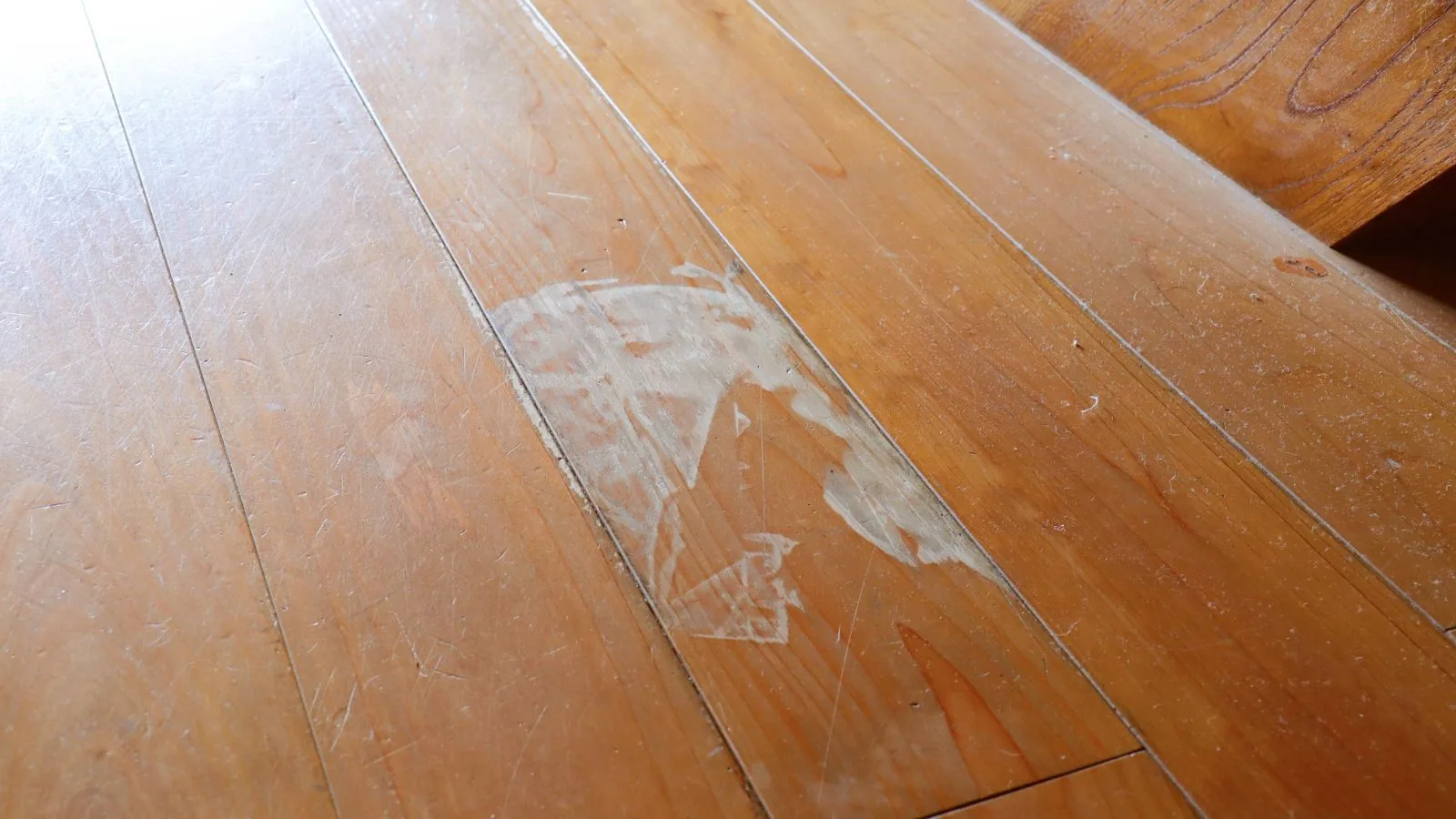
Hardwood is one of the materials where speed matters most. Boards absorb water, swell and cup within days, and a floor dried quickly can often be saved while one left wet may need replacement. If boards are lifting, edges are curling or the floor feels damp, call dispatch and keep foot traffic off.
Hardwood floor water damage repair is the drying and, where needed, the sanding, refinishing or replacement of wood flooring after water exposure. Solid wood and engineered wood behave differently, and the subfloor under them matters just as much as the boards.
Water usually comes from a leak elsewhere. See appliance leaks, kitchen losses and basement water for common sources.
Hardwood damage patterns
The shape of the damage tells how long the floor was wet. The same steps apply in Waunakee neighborhoods such as Arboretum Village.
| Pattern | What it means | Usual outcome |
|---|---|---|
| Cupping | Edges higher than centers, wet from below | Often flattens after drying, may need sanding. |
| Crowning | Centers higher than edges | Can appear after cupped boards are sanded too soon. |
| Buckling | Boards lift off the subfloor | Often needs replacement. |
| Dark staining | Prolonged moisture or contamination | May need board replacement. |
| Cracking or gaps | Shrinkage after aggressive drying | Monitor and refinish or replace. |
Why drying speed decides the outcome
Wood takes on moisture from the air and from direct water, and it swells across the grain. If the swelling continues for days, the boards can pull from their fasteners or the subfloor. Quick extraction followed by controlled drying keeps more floors flat.
Drying hardwood too fast can crack it, so the crew uses floor mats and dehumidifiers and watches readings. The decision to sand or replace comes only after the wood has settled to its normal moisture level, which can take weeks for thick floors.
Boards cupping or lifting?
Call dispatch for drying before it gets worse.
How a hardwood floor is dried and repaired
- Standing water is extracted with low-profile tools.
- Floor drying systems pull moisture out through the boards and from under them when the subfloor is accessible.
- Moisture readings are logged until the boards return to a stable level, often after a settling period.
- Sanding and refinishing follow if the boards are flat, and replacement follows if they are not.
What affects hardwood floor repair costs
The range runs from drying only to full replacement.
Time wet
Days of wetness change the outcome.
Wood type and thickness
Thick solid floors dry slowly, engineered floors can delaminate.
Area
Open plans can affect large areas.
Finish and match
Replacing boards and matching a finish adds scope.
Sudden water events are often covered, while slow leaks usually are not. Ask your insurer, and photograph the floor early.
Solid versus engineered flooring
The type of floor changes the plan.
| Floor type | How it reacts to water | Typical approach |
|---|---|---|
| Solid hardwood | Cups and crowns, can often flatten after drying | Dry slowly, then sand and refinish if flat. |
| Engineered hardwood | Layers can delaminate and swell at edges | Often replaced if the top layer separates. |
| Laminate | Core swells and edges lift | Usually replaced. |
| Parquet or glued-down wood | Adhesive fails and pieces lift | Section replacement or full replacement. |
Sanding, refinishing or replacing
Once readings are stable, a flooring professional judges the surface. Flat boards with minor staining can be sanded and refinished. Boards that remain cupped, cracked or stained deep into the grain are replaced, and matching the species and finish across a room takes planning.
Waiting is part of the process. Rushing the finish onto wood that has not settled can trap moisture and cause the floor to fail again.
What you can do while you wait for the crew
Keep foot traffic off the floor and remove rugs, mats and furniture legs that trap moisture. Do not seal the floor with wax or polish, and do not cover it with plastic, since trapped moisture slows drying. Keep the house at a steady, normal temperature so the equipment can work.
Photograph the boards from a low angle in daylight, because cupping shows best in raking light. Take new photos every day, so there is a record of how the floor changed as it dried.
Hardwood floor questions
Can you start drying a hardwood floor the same day in Waunakee?
Same-day response is offered when crews are available. Faster drying saves more floors, so call as soon as you see water.
Can cupped hardwood be saved?
Often, if it is dried quickly and given time to settle. Sanding or replacement comes after readings stabilize.
Should I sand the floor right away?
No. Sanding too soon can lock in a crowned profile. Wait for stable readings.
Is hardwood water damage covered by insurance?
Sudden water events are often covered, and slow leaks often are not. Check your policy.