

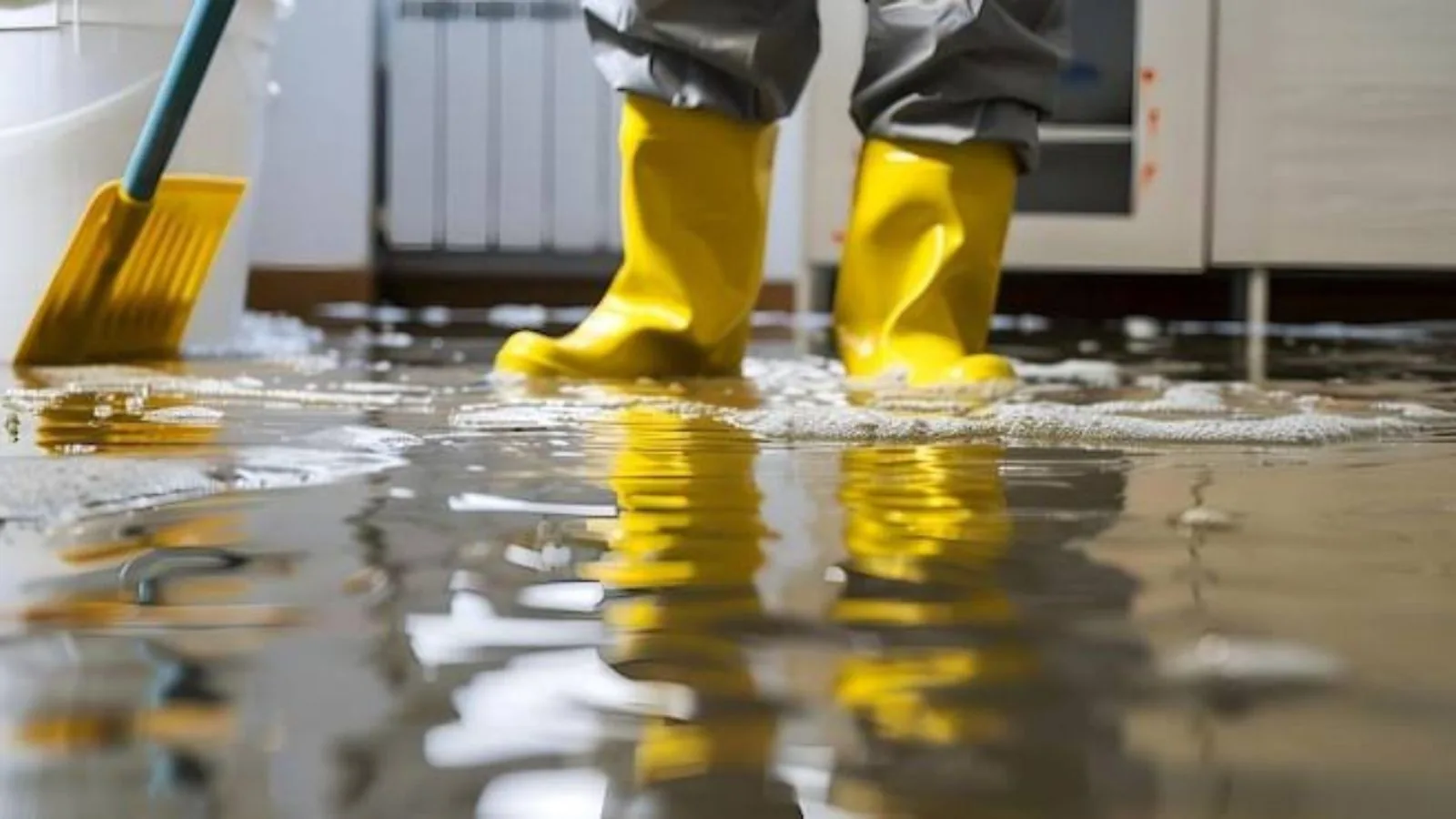
Flood water is an emergency with a safety problem attached, because it is rarely clean. Treat floodwater as contaminated, stay out of it if you can, keep children and pets away, and stay clear of electrical until the power is confirmed off. Call the 24/7 line before you start moving things, so the crew can tell you what to save and what to leave.
Flood damage restoration is the cleanup and drying of a structure after rising or flowing water enters from outside. That includes creek overflow, groundwater, surface runoff and heavy rain that overwhelms drainage. The water is Category 2 or 3 under the ANSI/IICRC S500 standard, which changes what can be saved.
This page is about outside water coming in. Storm wind and rain that enters through a roof or window is covered on the storm damage page, and water that seeps below grade is covered on the basement page.
Flooding right now: stay safe first
Your safety comes before the house.
- Do not wade through floodwater to reach the panel. Call your electric utility or 911 if water is near electrical.
- Do not walk into water of unknown depth. Floodwater can hide debris and open drains.
- Shut off gas and propane if you smell gas and can leave safely, then call the utility.
- Photograph the high-water mark and the damage before cleanup, and call dispatch.
Why floodwater changes the job
River and surface water picks up soil, fertilizer, fuel and sewage on its way into a house, so it is classed as Category 2 or 3 on arrival. Porous materials such as carpet pad, insulation and unsealed drywall are usually removed. Hard surfaces are cleaned and sanitized before drying begins.
This is different from a clean-water leak, where more can be dried in place. After a flood the first questions are what must go, how fast, and how to remove it safely, and only then how to dry what stays.
Water rising or just receded?
Call the 24/7 line. Crews arrive with pumps and protective gear.
How a flood cleanup runs
- Water is pumped out gradually when the flood has receded, so the structure is not stressed by sudden change.
- Contaminated porous materials are bagged and removed under protective controls.
- Surfaces and framing are cleaned and treated with antimicrobial products.
- Air movers, dehumidifiers and air scrubbers dry the structure, with moisture readings logged until the dry standard is met.
- Repairs begin only once the structure is dry.
Flood context for Waunakee and Dane County
Six Mile Creek flows through Waunakee. Dane County's 2017 hazard mitigation plan lists one structure in the village in the 100-year floodplain and 22 in the 500-year floodplain, with none in the floodway. The mapped exposure is small, but the August 2018 Dane County flooding showed how a regional rainfall event can reach many homes, with county reports of more than $154 million in damage and 1,544 residences affected.
Check your own parcel on the FEMA Flood Map Service Center and ask your insurer whether you hold flood coverage. The Wisconsin Office of the Commissioner of Insurance notes that most homeowner policies do not cover flooding or seepage through the foundation, and that a National Flood Insurance Program policy generally has a 30-day waiting period before coverage starts.
What affects the cost of flood damage cleanup
Flood losses vary widely, so the scope comes first.
Water depth and duration
Longer contact means more materials fail and more removal is needed.
Contamination level
Category 3 adds protective gear, disposal and sanitizing.
Contents
Furniture and belongings may be saved or discarded depending on contact.
Structure type
Finished basements and crawl spaces take longer to clear and dry.
Repair scope
Rebuilding follows demolition and drying.
Flood insurance and homeowners policies differ, so ask your insurer what applies. Call dispatch for a walkthrough of how the scope is built.
Related pages after a flood
Most flood jobs also involve sewage backup cleanup when drains overflow, basement cleanup below grade, and structural drying across several rooms. Ask dispatch which of these your job needs.
Flood damage questions
Do you handle flood emergencies at night or on weekends in Waunakee?
Yes. Dispatch is open 24 hours a day and same-day response is offered when crews are available. Call, describe the water and follow the safety steps.
Is floodwater always contaminated?
Treat it that way. Floodwater is generally Category 2 or 3, which means porous materials are usually removed and surfaces sanitized.
Does homeowners insurance cover flood damage?
Most homeowner policies do not cover flooding or seepage through the foundation. A separate flood policy is needed, and the Wisconsin insurance commissioner notes flood policies usually carry a waiting period.
Can I check whether my Waunakee address is in a flood zone?
Yes. Search your address on the FEMA Flood Map Service Center, or ask the Village of Waunakee about floodplain maps.