

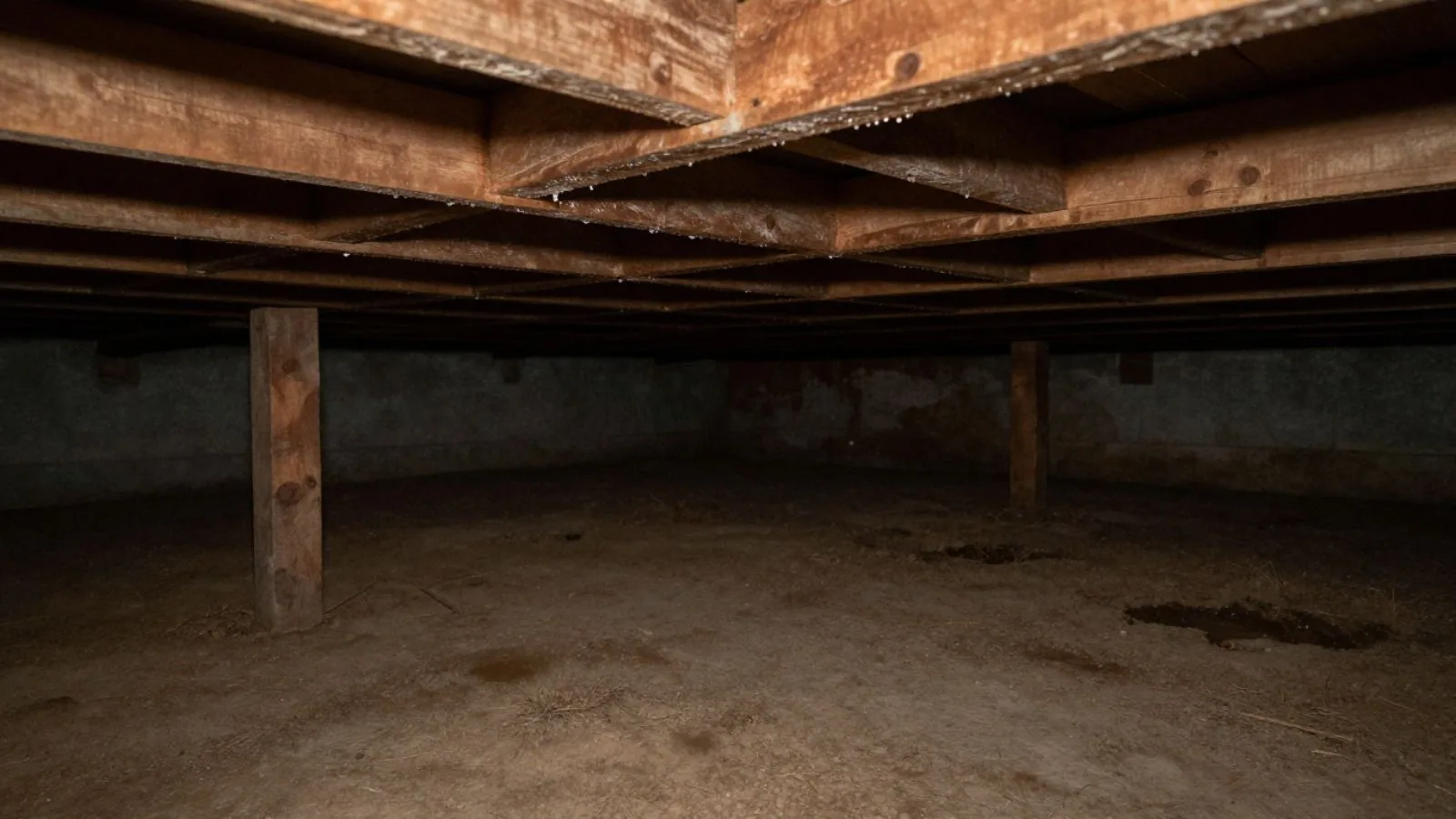
Water damage is one of the costliest things to discover after closing. Some of it hides behind fresh paint and new carpet, and some of it announces itself the first time it rains. A careful walk-through, plus a few questions, catches most of it before you sign.
This guide covers what to look for room by room, what to ask the seller and when to bring in an inspector. It is general advice for buyers in Waunakee and the nearby towns, and a licensed home inspector does the formal inspection.
If you find an active leak or wet material, an inspector or restoration crew can tell you the scope before you negotiate.
Start in the basement
- Look at the slab, the lower walls and the floor drain for stains, efflorescence (white mineral deposits) or a tide line.
- Smell the air. A persistent musty smell suggests ongoing moisture.
- Check the sump pit, the pump and the discharge, and ask when the pump was last replaced.
- Look behind stored items, since sellers often stack boxes against wet walls.
- Check the water heater and furnace area for rust, scorching or old drip marks.
Signs of water damage by room
Not every sign is a problem, but each one deserves a question.
| Area | What to look for | What it may mean |
|---|---|---|
| Ceilings | Rings, stains, fresh patches of paint | Past roof, plumbing or HVAC leak. |
| Walls | Bubbling, soft spots, mismatched paint | Moisture behind the surface. |
| Floors | Cupping, lifting, gaps, soft areas | Moisture below or a past leak. |
| Under sinks | Staining, swollen cabinet floors, mineral rings | Slow leak. |
| Windows | Stained sills, rotted trim | Failed seals or flashing. |
| Attic | Dark decking, stained rafters, compressed insulation | Roof or ventilation leak. |
Suspect hidden moisture?
Call for a moisture assessment.
Questions to ask the seller
Ask directly whether the home has ever had water damage, a basement leak, a sewer backup or an insurance claim for water. Ask about repairs and whether permits or receipts exist. A seller who has repaired a problem should be able to say what was done and by whom.
In Wisconsin, sellers typically complete a real estate condition report that asks about water and basement problems. Read it carefully, and compare the answers with what you see.
Use a meter, not just your eyes
A visual check misses moisture inside walls. Home inspectors can use moisture meters and thermal cameras to find wet materials, and some will do it as part of the inspection. If you see something suspicious, ask for a moisture reading before you commit.
A crew can also assess a suspect area and describe the scope, which helps you negotiate. See the pages on wall damage and ceiling damage for how the repairs run.
Local factors for Waunakee buyers
Dane County's 2017 hazard mitigation plan lists one structure in Waunakee in the 100-year floodplain and 22 in the 500-year floodplain. Check any address you are serious about on the FEMA Flood Map Service Center, and ask your insurer what coverage the property needs. Most homeowner policies do not cover flooding or seepage through the foundation.
The August 2018 Dane County flooding showed that heavy rain can reach homes outside the mapped zones. Ask about the home's history during that event, and look at the basement closely. The same checks apply in Dane, DeForest and Mazomanie.
What to do if you find damage
Do not panic, and do not assume the deal is dead. Small, repaired problems are common, and an old stain may be fully resolved. Active moisture, repeated repairs and unknown causes deserve more concern.
You can ask the seller to repair the problem, adjust the price or provide a credit. If you buy a home with a past water loss, ask for the repair records and keep them with your closing documents.
Outside the house: clues buyers miss
- Gutters that sag, overflow or empty next to the foundation.
- Soil that slopes toward the house instead of away.
- Cracks in the foundation or block wall, especially with white deposits.
- Stains on siding below windows or roof edges.
- Landscaping that holds water against the walls.
The documents worth asking for
Ask for the seller's condition report, any inspection reports, repair receipts and the insurance claims history if the seller will share it. A home with a clean history is not guaranteed dry, and a home with a past claim is not necessarily a bad one. What you want is a clear story about what happened and what was done.
If you buy, keep the records with your closing documents. They help you when you sell, and they help your insurer if a related issue appears.
Home buyer questions
Can fresh paint hide water damage?
Yes, temporarily. Stains bleed through paint and moisture shows up as bubbling or smell, so use a meter and ask about repairs.
Should I ask for a moisture meter reading during the inspection?
Yes. A visual check misses moisture inside walls, and a reading gives you a number to discuss with the seller.
Is a damp Waunakee basement a deal-breaker?
Not always. A past seepage that has been corrected is different from an active problem. Ask what was done and get records.
Who pays for repairs found before closing?
It is negotiable between buyer and seller. Your agent and attorney can advise on how to ask.