

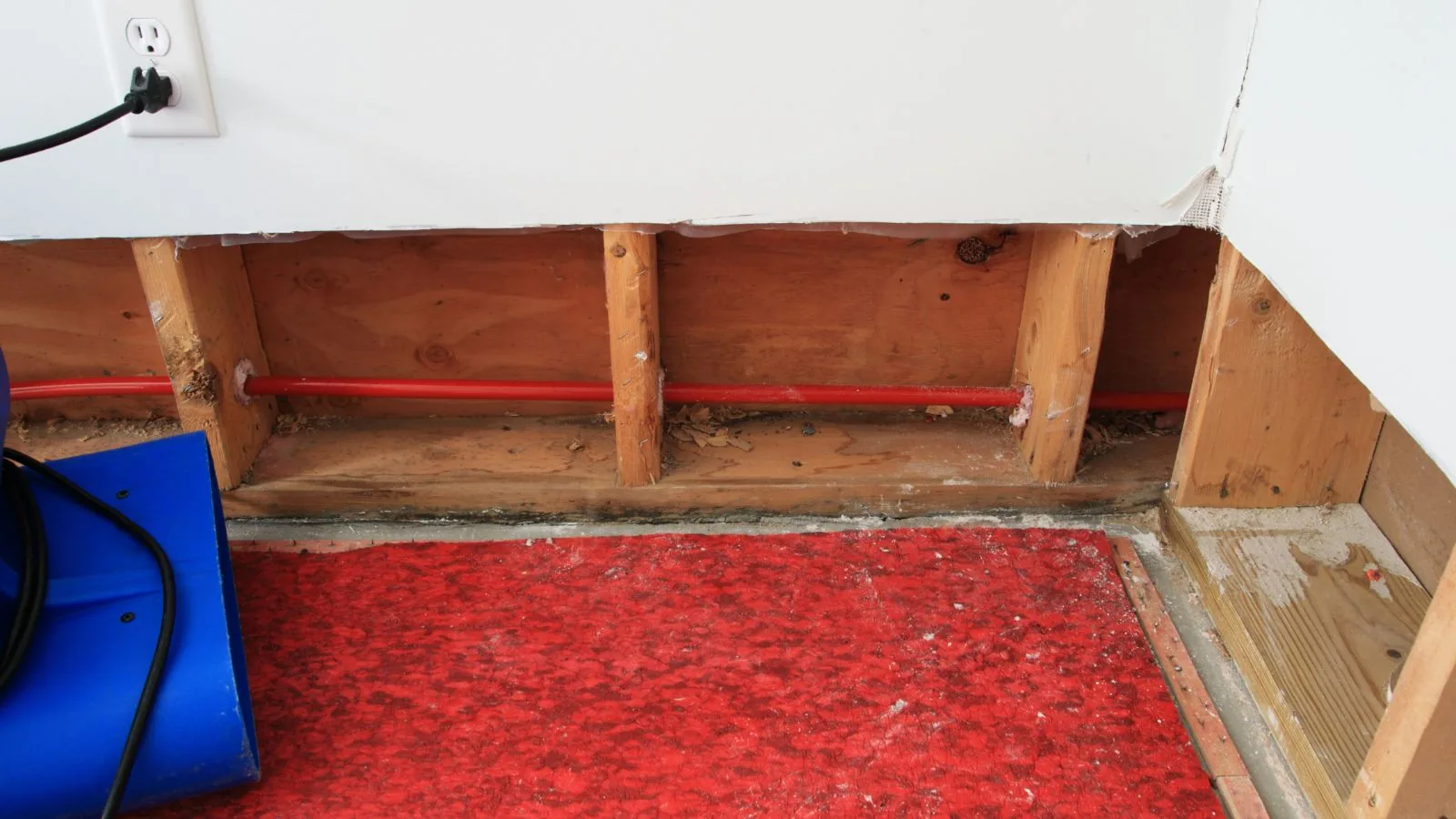
A musty smell after a leak is a signal, not just a nuisance. It usually means moisture is still trapped somewhere, in drywall, carpet pad, insulation or a wall cavity. Cleaning the surface does not fix it, because the smell returns as long as the material stays damp.
Moisture also feeds mold, and mold needs only moisture and organic material to grow. Whether any particular smell is mold takes testing to confirm, and any health question belongs to a physician. What you can do is find the damp spot and get it dried.
If the smell followed a recent leak, a moisture check is the right first step. If the leak is ongoing, stop the source first.
Where the smell usually comes from
The location of the smell points to the source.
| Where you smell it | Likely hidden source | Check first |
|---|---|---|
| Basement or lower level | Wet carpet pad, wall bottoms, floor drain | Pad and baseboards. |
| Near an exterior wall | Wet insulation or a roof or window leak | The wall cavity. |
| Under a sink or appliance | Slow leak into cabinet base and subfloor | Cabinet floor. |
| Near vents or air handlers | Condensate leak or damp duct | Drain pan and line. |
| Closed rooms after rain | Moisture trapped in a finished wall | Baseboards and corners. |
Why cleaning the surface does not work
Drywall, insulation and carpet pad are porous. They absorb water and release it slowly, so a surface that looks and feels dry can still smell. Air fresheners and deodorizers cover the odor for a day or two, and then it returns.
The fix is to find the wet material and dry it, or remove it if it cannot be dried. A moisture meter or thermal camera finds wet spots that your hand and eye cannot, which is why a structural drying assessment starts with mapping.
Smell will not go away?
Call for a moisture check and a drying plan.
What you can check yourself
- Look for stains, bubbling paint, peeling wallpaper or warped baseboards.
- Feel the lower wall and the carpet edge for coolness or dampness.
- Check under sinks and behind appliances for slow leaks.
- Look at the HVAC drain pan and condensate line.
- Note whether the smell gets stronger after rain, which suggests water entering from outside.
When mold becomes a possibility
Mold can start growing on damp materials within a couple of days, and it thrives when materials stay wet. If you see growth, if the smell persists after the area is dry or if there are health concerns, testing and remediation follow the ANSI/IICRC S520 standard. Health questions belong to a physician, and this site does not diagnose or promise outcomes.
Keep humidity down while you sort it out. Running a dehumidifier and keeping the area ventilated helps, but it does not replace finding the source.
Why Waunakee basements smell after the thaw
Madison's 1991 to 2020 normals, the nearest official benchmark, show about 37 inches of precipitation and 52 inches of snow a year. The spring melt puts groundwater and sump pumps under their annual test, and a basement that stays slightly damp for weeks can develop that smell without ever showing standing water.
In Waunakee, Dane and DeForest, homes with finished basements are the ones that tend to trap it, because carpet, pad and drywall hold the moisture against the slab. A moisture check after a wet spring is a reasonable habit. See also basement water damage cleanup.
When to call for a moisture check
Call if the smell followed a leak, if it is getting stronger or if you find a stain or soft spot. Call sooner for a wet carpet, a ceiling stain or a damp wall, since each of those is a place where carpet, ceiling and wall materials can be saved or lost on timing.
What makes a smell worse
- Closing off a damp room with no air movement.
- Leaving wet carpet, towels or boxes in place.
- Running a humidifier in a space that is already damp.
- Covering the odor with scented products instead of finding the source.
- Waiting for the weather to dry it out on its own.
What a moisture check involves
A technician reads the humidity in the room, tests the surfaces with a meter and scans walls and floors with a thermal camera. The process usually takes under an hour for a single area. The result is a map of where moisture sits, and a recommendation: dry in place, open and dry, or remove.
You get a clear answer instead of a guess, and you know whether the smell is coming from something small or something that needs real drying.
Fast steps while you wait
Open windows when the weather allows, run a dehumidifier and move belongings away from the smelly area. Do not seal the room. Keep notes on when the smell is strongest, since the timing helps a technician find the source.
Musty smell questions
Does a musty smell always mean mold?
No. It means moisture is present and mold may be growing. Testing confirms it, and a physician handles any health question.
Can I get rid of the smell with a deodorizer?
Only temporarily. The smell returns until the damp material is dried or removed.
Why does my Waunakee basement smell worse in spring?
The spring melt raises groundwater and stresses sump pumps, so carpet, pad and wall bottoms stay damp for longer.
Can you find a hidden wet spot without opening the wall?
Often. Moisture meters and thermal imaging show wet areas behind surfaces before anything is cut.