

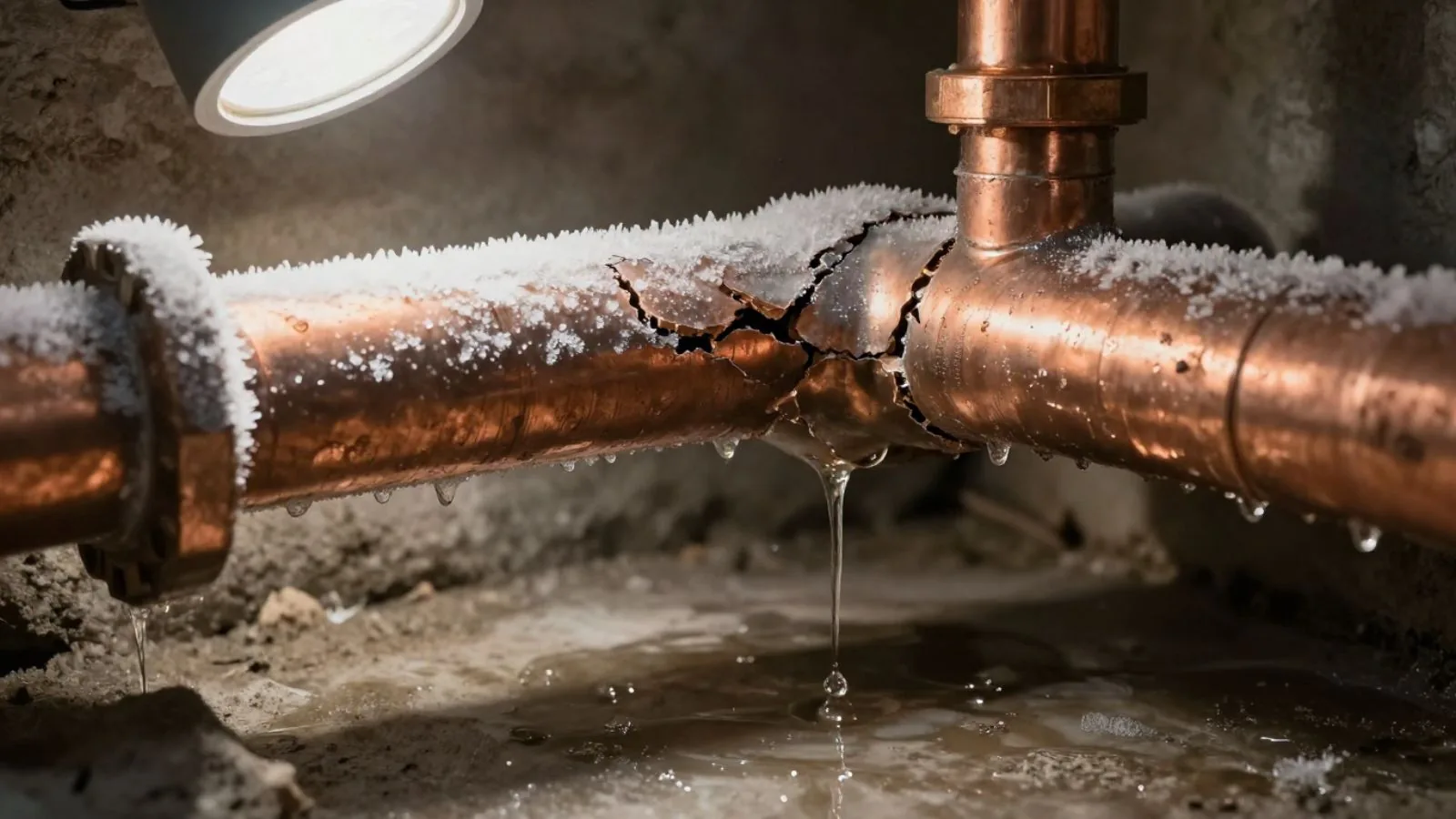
Wisconsin cycles through every water risk in a single year. Winter freezes split pipes, spring melt tests sump pumps, summer storms overwhelm drains and fall leaves clog gutters just before the freeze. Knowing the calendar lets you check the right thing at the right time.
This guide goes season by season, using Madison's 1991 to 2020 climate normals as the nearest official benchmark for Waunakee. Treat the numbers as a guide, not a local measurement.
If you are looking at damage right now, see the services page and call the 24/7 line.
The year at a glance
Each season has a typical failure and a typical fix.
| Season | Typical failure | What to check |
|---|---|---|
| Winter | Frozen and split pipes, ice dams | Exterior wall pipes, attic insulation, eaves. |
| Spring | Snowmelt seepage, sump overload | Sump pump, window wells, foundation. |
| Summer | Storm runoff, AC condensate overflow | Gutters, drain lines, roof. |
| Fall | Clogged gutters, outdoor faucet freeze | Gutters, hose bibs, shutoff valves. |
Winter: freezes and ice dams
Madison's January average is 19.4 degrees and the average low is 11.8. Pipes in exterior walls, attics, garages and crawl spaces freeze first, and the split often shows only when the ice melts. Letting a faucet drip during a hard freeze and opening cabinet doors on outside walls helps.
Ice dams form when heat leaking into the attic melts roof snow that refreezes at the eaves. Meltwater then backs up under shingles and into the wall tops and ceilings. Read about the pipe side on the frozen pipe page.
Water damage this season?
Call the 24/7 line for any season.
Spring: the melt and the first heavy rains
Madison averages about 52 inches of snow a year, and the melt puts groundwater at its seasonal peak. Sump pumps work harder in March and April than any other time. Test yours, clear window wells and check where downspouts discharge.
Spring is also when basement seepage shows up. The Wisconsin insurance commissioner notes that seepage through the foundation is generally not covered, so catching dampness early and fixing drainage matters. See basement cleanup for what happens when water comes in.
Summer: storms and the August 2018 lesson
Madison averages about 37 inches of precipitation a year, and a large share arrives in summer storms. Dane County's August 2018 flooding, with more than $154 million in damage and 1,544 residences affected, was a summer event. It showed that a single storm can overload drains, creeks and sump pumps across the county at once.
Summer also brings AC condensate overflows. A clogged drain line can leak into a ceiling for weeks. See the AC leak page for the signs.
Fall: the preparation window
Leaves clog gutters and downspouts just when you need them for freezing rain and the first snow. Clear them, disconnect and drain hoses, and shut off outdoor faucets. Check that attic insulation is even and that vents are clear.
Fall is also the time to review insurance. Check for a water backup endorsement, and look at your parcel on the FEMA Flood Map Service Center. The NFIP waiting period is generally 30 days.
A simple annual checklist
- Fall: clear gutters, drain outdoor faucets, check attic insulation.
- Winter: keep the heat on, open cabinets on cold nights, know where the main valve is.
- Spring: test the sump pump, clear window wells, watch for dampness.
- Summer: check AC drain lines, clear storm drains, inspect the roof after storms.
How to use this calendar
Pick one weekend each season and do the checks listed for it. Put the dates on your calendar the way you would for a furnace filter. Most of these tasks take under an hour, and they target the failures that cost the most. Keep a short log of what you checked and what you found, because patterns over several years tell you what your house does.
If you find something you cannot fix, call the right trade early. A plumber in October is easier to book than a plumber in a January cold snap.
Quick signs that a season is going badly
- Winter: a faucet that runs slowly or stops in a cold snap.
- Spring: a musty smell or damp patch near the foundation.
- Summer: a ceiling stain under an air handler or bathroom.
- Fall: gutters overflowing at the corner of the house.
Why local timing matters
Madison's 1991 to 2020 normals are the nearest official benchmark, and conditions in Waunakee follow the same pattern. A late cold snap or a fast spring melt can shift the calendar by weeks, so treat the seasons as a guide and watch the forecast for freezes, thaws and heavy rain.
One more practical step
Write the seasonal checks on a calendar so each one happens before the weather turns, not after.
Seasonal water damage questions
When are pipes most likely to freeze in Waunakee?
During multi-day cold snaps in winter. Madison's January average is 19.4 degrees, and pipes in exterior walls and unheated spaces freeze first.
What is the riskiest season for basements?
Spring, when the melt and the first heavy rains put groundwater and sump pumps under the most stress.
Did the 2018 Dane County flooding reach Waunakee?
It affected many Dane County residences, with 1,544 reported. The point for homeowners is that heavy rain can flood basements far from mapped floodplains.