

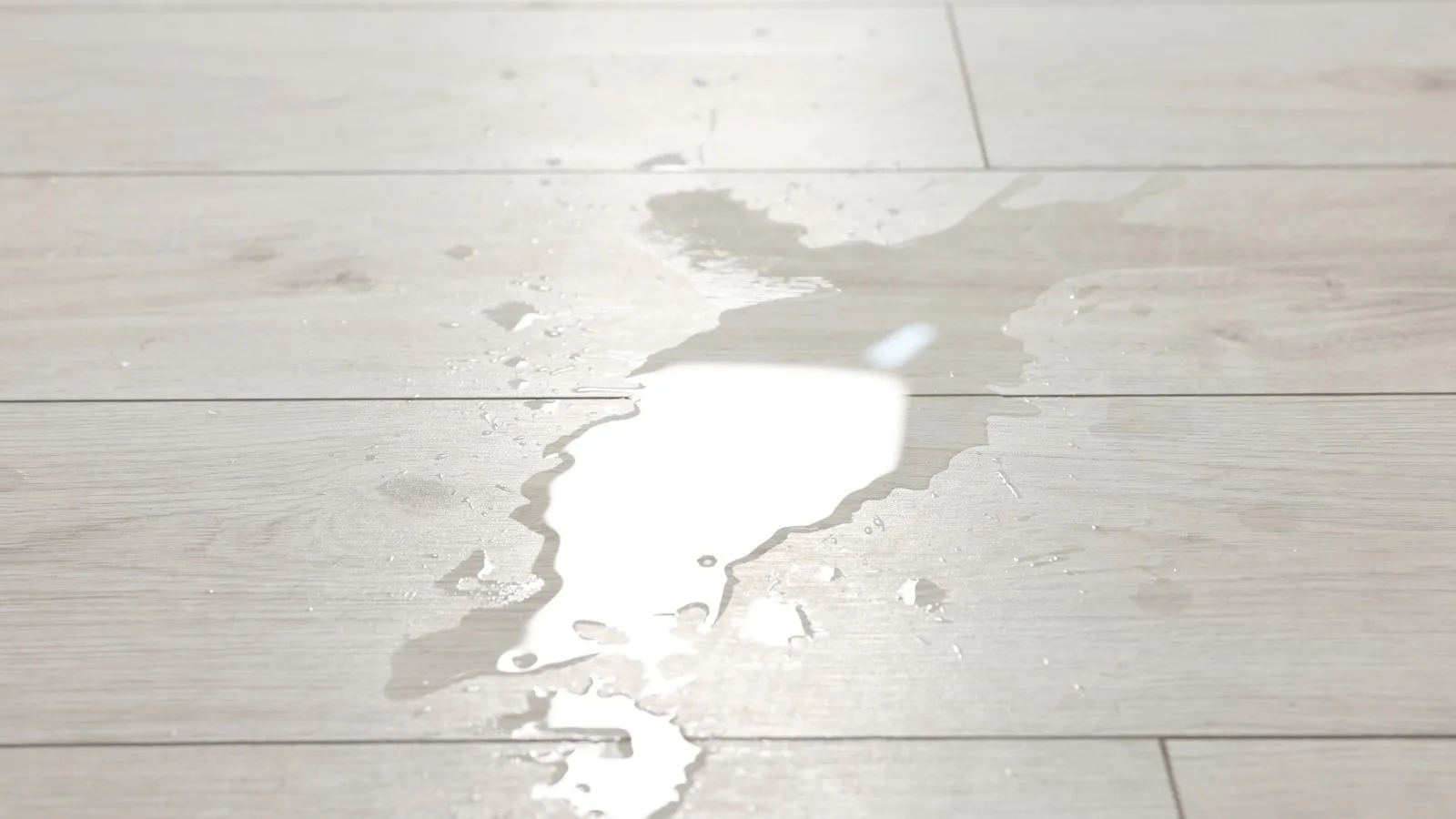
A small leak raises a real question. If the repair costs a little more than your deductible, filing a claim may not pay off, and a claim can affect your coverage and premiums down the road. At the same time, a leak that looks small can hide larger damage, and walking away from coverage can be a mistake.
This guide lays out the factors in plain language. It is general information, and your insurer and agent are the right people to ask about your policy. A restoration crew can tell you the scope but cannot decide coverage.
Whatever you decide, stop the leak and document it first.
Factors that push the decision
Weigh these together, not one at a time.
| Factor | Leans toward filing | Leans toward paying yourself |
|---|---|---|
| Estimated cost versus deductible | Well above the deductible | Close to or below it. |
| Hidden damage risk | Wall, ceiling or floor involved | Surface only, easy to confirm. |
| Cause | Sudden and accidental, clearly covered | Slow leak or wear, probably excluded. |
| Claim history | Few or no prior claims | Several recent claims. |
| Home value and age | Older plumbing, repeat risk | New repairs already made. |
Why small leaks can be bigger than they look
Water finds paths. A drip under a sink can wet the cabinet base and the subfloor, and a stain on a ceiling can mean wet insulation above it. The visible area is often a small part of what is wet. A moisture reading before you decide is cheap insurance against underestimating.
If the readings show a limited area, you can decide with better information. If they show more, filing may make more sense. See the pages on kitchen losses and ceiling leaks for common cases.
Unsure how big the leak is?
Call for a moisture assessment.
A sensible order of operations
- Stop the leak and take reasonable steps to protect the home.
- Photograph the damage and keep the failed part.
- Get a moisture assessment and a written scope of work.
- Read your policy for the deductible, exclusions and notice requirements.
- Call your agent and ask general questions about how a claim could affect you, before you file.
- Decide, and keep the records either way.
Do not skip documentation
Even if you do not file, keep the photos and receipts. If the damage turns out to be bigger later, or if you sell the home, records of what happened and what was fixed matter. The Wisconsin insurance commissioner advises homeowners to photograph damage and keep samples until the adjuster has seen them, which only helps if a claim is filed.
Reporting timelines in a policy can be strict, so asking your insurer early protects your options.
Local notes for Waunakee homeowners
Many Waunakee homes have finished basements, where a small leak can wet carpet, pad and drywall at the same time. The commissioner notes that sewer backup and sump overflow generally need an endorsement, so check before assuming a basement leak is covered.
Cold winters add repeat risk for older plumbing, and Madison's January average is 19.4 degrees. If this is the second leak in the same line, a repair now may save a larger claim later. The same applies in Dane, DeForest and Mazomanie.
What we can and cannot tell you
We can measure the damage, write the scope and tell you what drying involves. We cannot tell you whether your policy will pay, and we cannot predict how a claim will affect your premiums. Those are questions for your insurer and agent, and we recommend asking them directly.
Questions to ask your agent in general terms
- How do water claims affect renewal in general?
- Is there a difference between reporting a loss and filing a claim?
- What are the notice deadlines in my policy?
- Does my policy have a separate water damage deductible?
- How does coverage treat a slow leak versus a sudden one?
The cost of waiting
The danger in a small leak is hesitation. If you wait to decide while the area stays wet, a small repair becomes a large one and the case for covered, sudden damage gets weaker. Dry the area promptly, document the work and decide about the claim with the facts in hand.
You can usually dry now and decide about filing later, as long as you keep records and meet any notice deadlines.
A simple way to decide
Write down three numbers: the expected cost of the repair, your deductible and your reasonable worst case if the damage is bigger than it looks. If the worst case is far above the deductible, call your agent in general terms before you decide. If both numbers are small and you have a moisture reading showing a limited area, paying yourself may be reasonable.
Small leak claim questions
Will filing a small claim raise my premiums?
It can depend on your insurer and your claim history. Ask your agent before filing, in general terms.
What if the repair is only slightly above my deductible?
Get a moisture assessment to check for hidden damage, then talk to your agent about whether a claim makes sense.
Do I still need to document a leak I do not report?
Yes. Records help if the damage grows, if you later file or if you sell the home.
Is a slow leak in Waunakee covered?
Slow, long-term leaks are often excluded from coverage. Check your policy for maintenance and wear exclusions.