

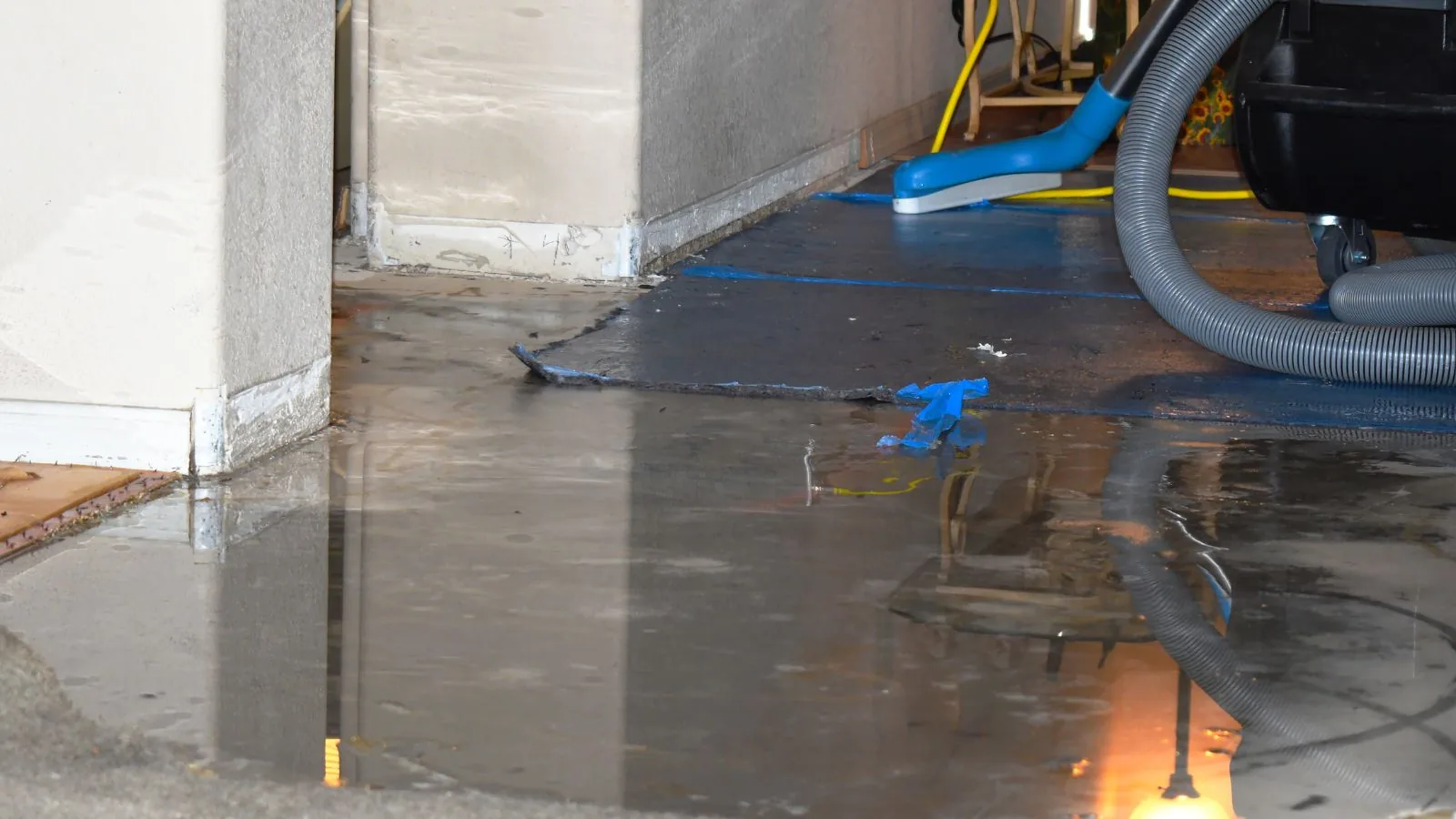
Anyone who quotes a flat price for water damage over the phone is guessing. The cost of a restoration job comes from what is wet, how wet it is, what the water was and how long it takes to dry. Until someone measures the loss, any number is only a rough guess.
This guide does not publish prices, because prices vary with each loss. It explains what moves the number, so the figure you hear and the written scope you receive make sense. Ask any company how the price is built before work begins.
If you want your real number, call dispatch and describe the loss. The crew explains the scope and the price before work starts.
The five factors that build the price
Each one shows up in the written scope.
Water category
Clean water costs less to handle than gray or sewage water, which bring protective gear, disposal and sanitizing.
Affected area
Square footage and number of rooms decide how many air movers and dehumidifiers run.
Materials involved
Drywall, carpet pad and insulation often come out. Hardwood and plaster may be saved with longer drying.
Drying days
Equipment time is set by what readings require, which is why monitoring matters.
Repair scope
Rebuilding walls, floors and finishes is separate and depends on what was removed.
Mitigation versus repair
Most jobs have two parts, and they are priced separately.
| Phase | What it covers | When it is priced |
|---|---|---|
| Mitigation | Extraction, demolition of wet materials, drying equipment, monitoring | At the start, from the scope. |
| Repair | Drywall, flooring, paint and finishes | After drying, once the damage is known. |
Want a scope and price?
Call the 24/7 line.
Why the first day changes the cost
Water spreads and soaks deeper with time. A clean water leak caught in hours may leave carpet and drywall that can be dried, while the same leak left for days means removal. Clean water left alone can slip into a higher category, which adds cost.
That is the practical reason to call early. The cheapest water damage job is the one where drying starts quickly, and the most expensive is the one where the leak runs unnoticed.
Insurance and what you pay
Whether the insurer pays depends on the cause and the policy. Sudden and accidental water damage is often covered, while seepage and flood generally are not, and sewer backup needs an endorsement according to the Wisconsin insurance commissioner. Your deductible is what you pay first.
Ask your insurer what applies before work begins, and ask the crew for a scope you can share. We do not decide coverage, and we do not guarantee claim outcomes.
Local factors in Waunakee
Winter jobs in the Waunakee area often take longer, because Madison's January average is 19.4 degrees and cold slows drying. Finished basements, common in the village and in Dane and DeForest, add scope because carpet, pad and drywall all need assessment. Older homes in Mazomanie may have materials that dry more slowly.
Regional events change the market too. After the August 2018 Dane County flooding, with more than $154 million in damage across the county, crews and materials were stretched, which affects timelines and cost.
Questions to ask any restoration company
- How is the price built, and what is included?
- Will I get a written scope before work starts?
- How are drying days decided, and will I see the readings?
- What happens if the scope changes?
- Do you follow ANSI/IICRC S500?
Reading a written scope
A good scope lists the rooms affected, the materials to be removed, the equipment to be placed and the monitoring plan. It separates mitigation from repair and says what happens if conditions change. If you receive a single lump sum with no breakdown, ask for one.
You should also see what the price does not include, such as repairs that wait until drying is done. A scope that explains itself is a sign of a company that expects to be questioned.
Red flags when comparing quotes
- A flat price quoted before anyone has seen the loss.
- No mention of moisture readings or a dry standard.
- Pressure to sign immediately without a written scope.
- No explanation of the water category.
- Vague language about what insurance will pay.
How to avoid surprises
Ask for the scope in writing, ask what would change it and ask to be told before it does. Scope changes are normal when a wall is opened and the water has gone further than expected, and they should come with an explanation and a photo.
Keep every written document, and share it with your insurer early. Clear paperwork is the best protection against a billing misunderstanding.
Cost questions
Why do you not publish prices?
Because a flat price is a guess. The real number depends on the water, the area, the materials and the drying days, and it comes after someone measures the loss.
What is the biggest driver of cost?
Usually the water category and the area affected. Contaminated water and larger spaces both increase scope.
Will insurance cover the cost?
It depends on the cause and the policy. Sudden and accidental damage is often covered, and seepage, flood and sewer backup are not without special coverage.
Can I get an estimate over the phone?
You can get a call-taker's guidance on scope, and the written scope and price follow once a crew has assessed the loss.